
Corporate investigations, insider risk & digital fraud
Suspected data loss, misuse of access or a sensitive internal allegation? Define a proportionate technical investigation with authorised sources, restricted reporting and findings tied to the questions your organisation must resolve.
Scope, deliverables and fees agreed before work begins.

Your concern
Data loss, misuse of access or a sensitive internal allegation.
The investigation
Proportionate analysis with agreed sources, access and reporting recipients.
Your deliverables
Referenced findings, a supported sequence of events and clear limitations.
Translate an allegation into testable questions
An allegation is a starting point, not a conclusion. We work with the authorised case owner to identify what is claimed, what would support or contradict it, and which evidence sources can answer the question. The investigation plan defines scope, reporting recipients, conflicts, access and escalation. Legal and HR teams determine applicable employment, privacy and procedural requirements.
Examine information movement and access
For suspected intellectual property loss or employee misuse, relevant sources can include endpoints, repositories, document platforms, access logs, email and authorised file-transfer records. We examine chronology, permission changes, unusual downloads or copying and the context of normal duties. A large transfer alone may have a legitimate explanation. The analysis tests alternative explanations and distinguishes technical account activity from attribution to a person.
For a suspected information transfer around a change of role, use the evidence and alternative-explanation checklist in our employee-departure investigation guide.
Investigate digital fraud and third-party deception
Payment diversion, false supplier communications and impersonation require a joined-up view of technical and business records. We correlate messages, domains, account activity and the relevant approval trail supplied by the organisation. Public-source research can clarify digital relationships and provenance within a lawful scope. We label unverified claims and identity matches carefully; similar names or shared infrastructure are not sufficient proof of association.
Keep a sensitive investigation controlled
We agree who receives evidence, how it is exchanged and how new findings can expand the scope. Collection and review should be proportionate to the question, with unrelated sensitive material restricted. Separate case workspaces and an access record support confidentiality. Interviews, legal privilege, disciplinary decisions and external disclosures are coordinated by the appropriate client advisers; our contribution is the technical evidence and its interpretation.
Where a legal team needs a reviewable document set, agree collection completeness, metadata and exceptions using the eDiscovery collection quality guide.
Provide a balanced report and practical remediation
The report sets out the allegation, sources examined, substantiated findings, contradictory evidence and remaining uncertainty. An executive briefing explains the impact without overstating intent or responsibility. Technical recommendations may address offboarding, privileged access, supplier verification, document permissions and investigation readiness. When further specialist accounting or legal analysis is needed, we identify the unanswered question and the evidence required.

Examine suspected information loss around a departure
An organisation may need to understand whether business information moved outside an authorised workflow before or after a change of role. We define the information, people, systems and period relevant to that question, with the appropriate authorisation. Available evidence can then be compared with normal working responsibilities and alternative explanations, rather than treating a large download or a departure itself as proof of misconduct.
Investigate fraud across records and communications
A suspicious invoice or supplier change may involve email, access logs, document versions and entries in business systems. We organise the technical evidence around the transaction question and coordinate with the team responsible for accounting or legal review. The report should make clear which facts were independently observed, which came from supplied records and which require verification by another specialist.
Manage sensitive reporting and conflicts
The commissioning organisation should identify an authorised sponsor and appropriate recipients before a sensitive review begins. We agree how relevant material is requested, who can see interim findings and how unexpected scope changes are handled. Where people responsible for a system may also be relevant to the enquiry, access and reporting arrangements need a considered alternative path.
What you receive
- Investigation plan with questions, sources and reporting boundaries
- Evidence register and correlated chronology
- Findings with supporting and contradictory evidence
- Executive report and technical exhibits
- Controls and follow-up actions linked to observed weaknesses
- Question-led investigation plan for the selected transaction or information set
- Restricted reporting and evidence-access arrangements
Common questions
Can you establish whether an employee is guilty?
We establish technical findings and explain their limits. Responsibility, employment decisions and legal conclusions belong to the appropriate decision-makers and process.
Can the work remain confidential?
We agree restricted recipients, secure handling and communications before collection. Any required disclosure or preservation obligations are addressed with the client’s advisers.
Can you support an investigation already led by a law firm?
Yes. We can provide a defined technical workstream, evidence collection, analysis and briefings under the agreed engagement structure.
Can you investigate only a defined transaction or information set?
Yes. A proportionate scope can focus on specific records, systems and questions. We assess whether that scope can answer the question and flag when additional evidence would be needed.
Will an unusual action automatically be reported as misconduct?
No. The technical analysis should consider context, legitimate duties and alternative explanations. Findings describe the evidence and its limits; disciplinary and legal decisions belong to the authorised decision-makers.
Connected expertise
All services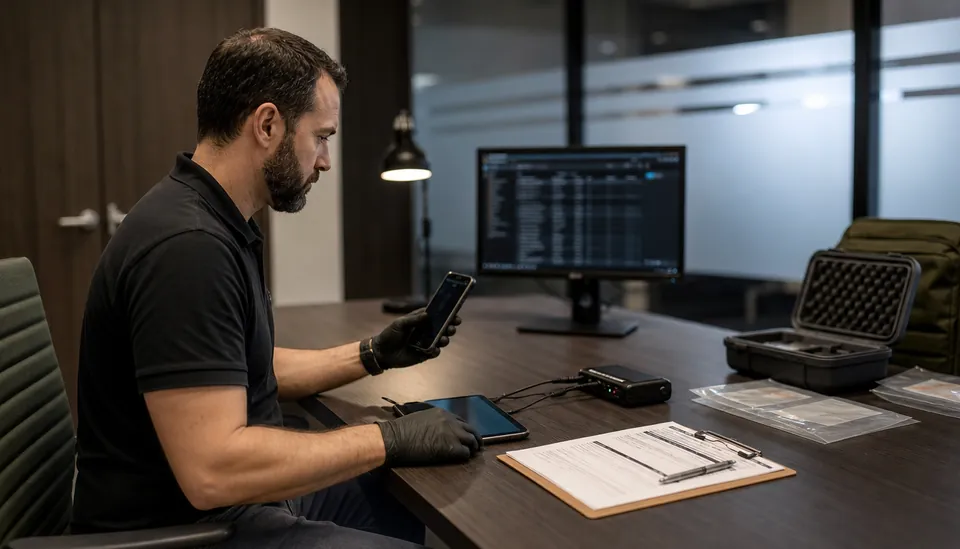
Computer & mobile forensics
Forensic examination of computers, phones, storage media and backups, with documented acquisition, timelines and evidence limitations.
Explore service
Email & cloud investigations
Investigations across Microsoft 365, Google Workspace and cloud environments, including business email compromise, access and data sharing.
Explore service
Threat intelligence & brand protection
Open-source research, threat intelligence, social media monitoring, and assessment of impersonation and digital exposure.
Explore serviceA clear next step
Start with your question.
You do not need a technical specification to contact us. Describe the need and we will help define the right scope.
- Send a brief description and any deadline.
- We clarify scope, access and confidentiality.
- Receive a proposal with deliverables, timing and fees before work begins.
For an active security incident, call the team. Agree a secure channel before sharing evidence or sensitive information.